Description
The New Frontier of Private Trading: Why You Should Buy Verified Decentralized Exchange Accounts
Decentralized exchanges (DEXs) represent the purest form of crypto trading—permissionless, non-custodial, and borderless. Unlike centralized exchanges that hold your funds and demand your identity, DEXs allow you to trade directly from your own wallet, with complete control over your assets.
But here is the reality in 2026: even these decentralized platforms are being pulled into the orbit of global regulation. Uniswap’s frontend now blocks sanctioned jurisdictions. dYdX has fully pivoted to institutional clients, requiring KYC for all users. Major DEXs are implementing geographic restrictions and, in some cases, mandatory identity checks.
For professional traders, this creates a paradox: the privacy and freedom of DEXs are eroding, but the power of DeFi remains unmatched. How do you access the deepest liquidity pools, earn yield from top protocols, and trade across chains without surrendering your privacy?
The answer is a verified decentralized exchange account—a pre‑configured wallet and access setup that combines the best of both worlds: the operational scale of a professional trading environment with the permissionless nature of DeFi.
Verified Marts (VM) provides precisely this infrastructure.
Chapter 1: What Are Verified Decentralized Exchange Accounts?
A verified decentralized exchange account is not a login to a corporate database. There is no central server holding your credentials. Instead, a verified DEX account is a pre‑configured trading setup that includes:
-
A non‑custodial wallet (MetaMask, WalletConnect, Phantom) with existing activity—already funded, with transaction history, and whitelisted on major DEX frontends.
-
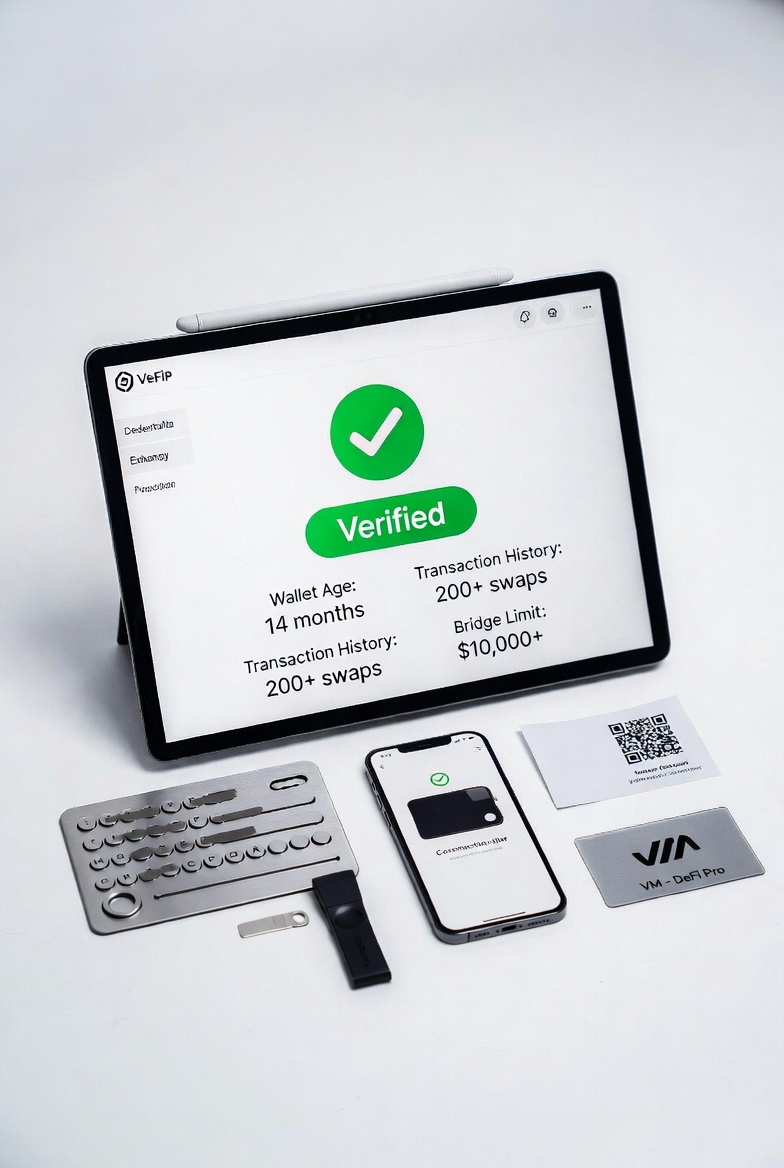
Established wallet age and history (typically 3–12 months of regular DeFi interactions), which matters more than you might think. Many DEX frontends impose stricter scrutiny on brand‑new wallets.
-
Cross‑chain bridge accounts (Stargate, LayerZero, Portal) pre‑approved for larger transfer limits, allowing you to move significant value across networks with a single signature.
-
Liquidity provision positions already set up, if desired, for immediate yield generation.
Unlike a centralized exchange, you are not “registering” with Uniswap or PancakeSwap. There is no account to ban. The core protocol remains permissionless: you can always interact directly with the smart contract using any wallet. However, the frontend interfaces—the websites you use to actually trade—increasingly require whitelisted wallets, API keys, or geographic access tokens.
A verified DEX account from VM gives you a trusted wallet identity that operates seamlessly across all major DEX frontends and aggregators.
The Paradox of “Verification” on DEXs
Unlike CEXs where “verification” means KYC documents, a DEX is technically permissionless. You can always interact directly with a Uniswap smart contract from any wallet using a custom script or a decentralized interface like Rainbow or Zerion.
But in 2026, frontend restrictions are the new reality:
-
Uniswap’s official web interface blocks wallets connected to VPNs originating from sanctioned regions.
-
dYdX now requires full KYC for all users after its pivot to institutional clients.
-
Many DEX aggregators (1inch, Paraswap) implement API key requirements for high‑frequency access.
A verified DEX account from Verified Marts solves this by providing a wallet with a “trusted” on‑chain history and frontend access credentials where needed. Your wallet already has transaction volume, gas payment patterns, and DeFi interactions—all of which signal legitimacy to frontend filters. You are not “verified” by the DEX; you are verified by the blockchain’s own record.
Chapter 2: Why Pre‑Verified DEX Accounts Are in Demand
The Erosion of Frontend Anonymity
The core protocol of a DEX remains permissionless. The smart contract does not know or care who you are. But the frontend (the website you interact with) is controlled by a centralized entity—often a company. That company can:
-
Block access from specific IP addresses (geographic restrictions).
-
Require wallet whitelisting or API keys for high‑volume trading.
-
De‑list certain tokens based on regulatory pressure.
In 2026, Uniswap Labs restricts access from US‑sanctioned countries. dYdX has moved to a mandatory KYC model. For a trader with a brand‑new wallet, gaining access to these frontends can be frustrating or impossible.
The New Wallet Penalty
Even on permissionless DEXs, new wallets face hidden friction:
-
Higher slippage and worse execution: Liquidity providers’ algorithms often deprioritize wallets with zero activity.
-
Rate limiting: Some DEX aggregators throttle API calls from unrecognized wallets.
-
Bridge restrictions: Cross‑chain bridges impose lower single‑transaction limits on wallets with no history (500–1,000 vs $10,000+ for established wallets).
-
Yield opportunity delays: Many DeFi lending protocols require a minimum wallet age or transaction count before allowing high deposits.
The Geographic Lockout Reality
Many major DEX frontends are now inaccessible from certain countries. A “clean” wallet connected through a VPN often gets blocked. A verified wallet with a history of legitimate, geographically consistent activity faces far fewer automated blocks.
Chapter 3: The Strategic Benefits of Verified DEX Accounts from VM
✅ 1. Immediate, Unrestricted Access to Leading DEX Frontends
A brand‑new wallet is often greeted with CAPTCHAs, IP blocks, or wallet‑age restrictions on popular DEX frontends. A verified DEX account from Verified Marts has an established transaction history across major chains—Ethereum, BNB Chain, Arbitrum, Optimism, Polygon, Base, Solana, and Sui. You connect and trade immediately.
✅ 2. Higher Cross‑Chain Bridge Limits
Bridges like Stargate, LayerZero, and Portal impose lower limits on new wallets (often 500–2,000 per transaction). An aged, active wallet can execute single transfers of $10,000 or more. For professional traders moving value across chains, this is essential.
| Bridge | New Wallet Limit | Aged Wallet Limit |
|---|---|---|
| Stargate | $1,000 per transaction | $10,000+ |
| LayerZero | $500 via hourly, large limits via qualification | $25,000+ with history |
| Owlto Finance | Smart routing, volume‑dependent | $10,000 single transaction (Safe Harbor eligible) |
✅ 3. Access to DEX Aggregator APIs
Professional traders often rely on aggregators like 1inch, Paraswap, Matcha, or Cow Swap for best execution. Many of these now require API keys for high‑frequency access. A verified account from VM includes pre‑configured API access with elevated rate limits.
✅ 4. Pre‑Established DeFi Relationships
Yield generation is where DEXs truly shine. A verified wallet with a history of liquidity provision, staking, or lending—across platforms like Aave, Compound, Lido, Curve, and Convex—is already “trusted” by those protocols. You can deposit large amounts immediately without the typical “new user” cooldown period.
✅ 5. On‑Chain Reputation and Trust
Blockchain forensics firms like Chainalysis and Elliptic assign “risk scores” to wallets based on transaction history. A brand‑new wallet with zero activity is often flagged as “high risk.” An aged, active wallet with legitimate DeFi interactions has a low risk score, meaning smoother interactions with compliant frontends and bridges.
✅ 6. Multi‑Wallet Strategies for DeFi Power Users
Sophisticated DeFi operators often use multiple wallets to:
-
Separate strategies: One wallet for liquid staking, another for concentrated liquidity, a third for leveraged yield farming.
-
Isolate smart contract risk: If one wallet interacting with a novel protocol gets drained, others remain safe.
-
Bypass per‑wallet rate limits: Spread high‑frequency interactions across multiple endpoints.
-
Maintain operations during wallet blacklisting: If one address is flagged by a bridge or frontend, others continue functioning.
VM offers bulk wallet packages for professional DeFi operators.
✅ 7. Gas Efficiency and MEV Protection
Established wallets with a history of paying gas fees on specific chains are often prioritized in mempool transactions. Verified Marts accounts come with a history of “normal” gas spending patterns, reducing the chance of being front‑run by MEV bots.
✅ 8. Access to Restricted Token Pools
Many DEXs have token lists that exclude certain assets for regulatory reasons. A wallet that has transacted with these tokens in the past may retain access through alternative frontends. Verified accounts can be pre‑configured to interact with these pools.
Chapter 4: Types of Verified DEX Accounts We Offer
Verified Marts provides a range of DEX‑ready wallet setups tailored to different trading and yield strategies.
✅ 1. Verified Multi‑Chain DEX Wallets
A non‑custodial wallet (MetaMask, Rabby, Phantom) with activity across 5–10 major chains: Ethereum, BNB Chain, Arbitrum, Optimism, Polygon, Base, Avalanche, Solana, Sui, and Aptos.
-
Transaction history: 3–12 months of legitimate DeFi interactions.
-
Gas payment patterns: Consistent fee payments, no “dusting” attacks.
-
Cross‑chain bridge usage: Regular use of Stargate, LayerZero, Across, etc.
-
Best for: All‑around DEX trading, cross‑chain arbitrage.
✅ 2. Verified Liquidity Provider (LP) Accounts
Wallets actively providing liquidity across major DEXs (Uniswap V3, PancakeSwap, Curve, Balancer) and earning fee yield.
-
Positions already open: Passive yield begins accruing immediately.
-
Impermanent loss history: Real data on how the positions have performed.
-
Best for: Yield farmers, passive income seekers, institutional liquidity providers.
✅ 3. Verified DEX Aggregator API Accounts
Pre‑configured API keys for 1inch, Paraswap, Matcha, Cow Swap, and OpenOcean.
-
Rate limits: Elevated (often 100–500 requests per minute), suitable for algorithmic trading.
-
Best for: Quantitative traders, MEV searchers, high‑frequency strategies.
✅ 4. Verified Cross‑Chain Bridge Accounts
Wallets with a history of executing large cross‑chain transfers.
-
Bridge whitelisting: Pre‑approved for elevated limits on Stargate, LayerZero, Portal, Across, and Owlto.
-
Best for: Arbitrageurs moving value across 10+ chains, OTC desks.
✅ 5. Verified Perpetual DEX Accounts (dYdX, GMX, Gains)
Important: dYdX now requires mandatory KYC. For traders seeking access to perpetual DEXs, VM offers pre‑verified accounts that have already completed dYdX’s KYC process, including ID verification and video selfie.
-
Features: High leverage (up to 50×), low funding rates, deep liquidity.
-
Best for: Experienced perp traders seeking CEX‑like derivatives with self‑custody settlement.
✅ 6. Corporate DeFi Wallets (Multi‑Sig)
For family offices, DAOs, and funds, VM offers multi‑signature wallets (Gnosis Safe, SafePal) with:
-
Multiple signers (2/3, 3/5, etc.).
-
Transaction history with large‑scale DeFi protocols.
-
Pre‑approved for institutional liquidity pools.
✅ 7. Vintage/Grandfathered DEX Wallets (1–3+ Years Old)
The most valuable tier: wallets created before 2024, with extensive on‑chain history, significant transaction volume, and interactions with the deepest DeFi protocols. These wallets face virtually no frontend restrictions.
Chapter 5: How to Safely Buy Verified DEX Accounts from Verified Marts
Acquiring a DEX account is different from buying a CEX login. There is no central authority to transfer. Instead, VM delivers the seed phrase or private key of a non‑custodial wallet.
Step 1 – Select Your Desired Wallet
Browse our inventory at verifiedmarts.com. Each listing specifies:
-
Chains supported (Ethereum, BNB Chain, Arbitrum, Solana, etc.).
-
Transaction age (e.g., “14 months active”).
-
Total transaction count and volume.
-
Specific DeFi protocols used (Uniswap, Curve, Aave, etc.).
-
Cross‑chain bridge history.
-
API access (if included).
Step 2 – Live Verification
VM conducts a live video walkthrough where you see:
-
The wallet address on Etherscan or Solscan, showing transaction history.
-
The wallet’s current balances (if any—most are zero‑balance wallets).
-
Integration with major DEX frontends (connect wallet and see that it is not blocked).
-
API key functionality (if applicable).
Step 3 – Escrow & Payment
We use escrow payment protection. Your funds are held until you confirm successful import of the wallet and functionality across your desired platforms.
Step 4 – Secure Delivery of Seed Phrase
We deliver the wallet’s seed phrase or private key via encrypted channel (Signal, ProtonMail, or PGP). You then:
-
Import the wallet into your preferred interface (MetaMask, Rabby, Phantom, Backpack).
-
Change the wallet’s name/label (no effect on the underlying address).
-
Add new addresses derived from the seed (optional, for operational security).
-
Optional: Transfer assets to a new address derived from the same seed for separation.
Crucially, you own the wallet entirely. The seller cannot reclaim it because there is no central account to reset. The seed phrase is the ultimate control.
Step 5 – Test and Verify
We recommend you:
-
Check the wallet on block explorers to confirm the transaction history matches the listing.
-
Connect to Uniswap, PancakeSwap, Curve, and other DEXs to ensure full access.
-
If API access was included, test a small swap via the API endpoint.
-
For bridge accounts, test a small cross‑chain transfer to confirm elevated limits.
Step 6 – Warranty
Every DEX wallet from Verified Marts comes with a 30‑day replacement warranty. If the wallet’s history or access does not match the description, we replace it at no cost.
Chapter 6: Risks and How Verified Marts Mitigates Them
| Risk | Likelihood | VM Mitigation |
|---|---|---|
| Wallet previously used for illicit activity | Low | VM sources wallets from legitimate DeFi users. On‑chain history is fully transparent and verifiable before purchase. |
| Wallet associated with blacklisted frontend | Very low | We verify that the wallet connects to all major DEX frontends (Uniswap, PancakeSwap, Curve, 1inch) without restrictions. |
| Seed phrase compromised | Extremely low (VM) | We deliver seed phrase via encrypted channel and never retain a copy after delivery. You are advised to generate a new address from the seed for long‑term use. |
| Bridge or aggregator API key revocation | Low | API keys are generated for the buyer during handover, ensuring they are not shared with other users. |
| Smart contract risk (protocol exploit) | Medium (inherent to DeFi) | VM does not control DEX protocols. Always assess the security of any protocol before depositing large funds. Use hardware wallets and transactional limits. |
| Geographic frontend block | Low | The wallet’s history originates from a compliant region. Use a high‑quality residential proxy if needed. |
Chapter 7: Who Needs Verified DEX Accounts from VM?
-
Privacy‑conscious traders – Trade without KYC, without the risk of a centralized exchange freezing your assets.
-
Cross‑chain arbitrageurs – Need wallets with established bridge histories to move $10,000+ per transaction.
-
Yield farmers – Want immediate access to top DeFi protocols without the “new wallet” cooldown.
-
Quantitative DeFi funds – Use multiple verified wallets to execute strategies at scale without per‑wallet rate limits.
-
Institutional liquidity providers – Need aged wallets with history to access prime liquidity pools.
-
Global traders in restricted regions – Access Uniswap, dYdX, and other frontends via wallets with clean, compliant history.
-
Developers and smart contract testers – Require wallets with real transaction history for testing and deployment.
-
DAO treasuries – Use multi‑sig wallets with established on‑chain reputation for governance participation.
Chapter 8: Verified DEX Account vs. CEX Account – A Comparison
| Feature | CEX Account (Binance, Bybit) | DEX Account (VM Wallet) |
|---|---|---|
| KYC/Verification | Mandatory (ID, facial, address) | None (wallet history only) |
| Asset custody | Exchange holds your funds | You hold private keys / seed phrase |
| Withdrawal limits | 10k–2.5M per day (tiered) | No limits (blockchain‑determined) |
| Frontend access restrictions | Geo‑blocked for many countries | Minimal to none (wallet‑based) |
| Regulatory risk | Account can be frozen or seized | Wallet cannot be frozen by any authority |
| Access to DeFi yield | Limited (staking, earn products) | Full (liquidity pools, lending, leverage) |
| Perpetuals/futures | Up to 125× | dYdX, GMX, Gains (up to 50×, after KYC) |
| Transparency | Opacity (order books, risk engines) | Full (on‑chain, verifiable) |
| Best for | High‑leverage, high‑frequency, fiat on‑ramp | Privacy, yield, self‑custody, cross‑chain |
For traders who prioritize privacy, self‑custody, and access to the full DeFi ecosystem, a verified DEX account is the superior choice.
Chapter 9: The Future of Decentralized Exchanges
The path forward for DEXs is increasingly shaped by regulatory pressure and technological evolution.
-
Frontend restrictions will intensify: Uniswap, PancakeSwap, and dYdX will continue to implement geographic blocks and API key requirements, as they have already started.
-
Permissionless core, gatekept interface: The underlying DEX smart contracts will remain open. Access through centralized frontends will become more controlled.
-
Alternative interfaces will emerge: Decentralized interfaces like Rainbow, Zerion, and DeFiLlama will become critical.
-
DeFi security will improve: Despite high‑profile DeFi exploits (including the $292 million Kelp DAO incident), insurance and security protocols are maturing.
-
Grandfathered wallets: Addresses created before strict frontend rules will command a premium as the easiest path to friction‑free trading.
Investing in a verified DEX wallet today positions you to navigate these changes with an established on‑chain identity.
Chapter 10: Why Choose Verified Marts (VM)?
Verified Marts is the trusted source for pre‑configured DeFi wallets and DEX access.
-
Authentic on‑chain history – Every wallet has a genuine, verifiable transaction history (no testnet or fake activity).
-
Fresh, uncompromised wallets – We source wallets from users who have moved on from DeFi. The seed phrase is delivered directly.
-
Transparent verification – Live video walkthrough before any payment.
-
Escrow payment protection – Your funds are safe until you confirm the wallet meets your needs.
-
Warranty – 30‑day replacement guarantee.
-
24/7 support – Assistance with wallet import, proxy setup, and any technical questions.
-
Bulk packages – For funds and professional DeFi operators.
Visit verifiedmarts.com to explore our current inventory.
Final Thoughts
Decentralized exchanges represent the future of trading—permissionless, transparent, and free from the control of any central authority. But in 2026, accessing the full power of DeFi requires more than just a fresh wallet. The frontends that make DEXs usable are implementing restrictions, and the protocols that generate yield reward established wallets.
With a verified decentralized exchange account from Verified Marts, you inherit a trusted on‑chain identity. You trade without KYC. You move value across bridges at scale. You earn yield from the deepest liquidity pools—all from the moment you import the wallet.
The blockchain does not ask for your ID. It only asks for your signature.
Take the Next Step with VM
-
✅ Verified Multi‑Chain DEX Wallets – 10+ chains, extensive history.
-
✅ Verified Liquidity Provider (LP) Accounts – Passive yield from day one.
-
✅ Verified DEX Aggregator API Accounts – For quant and algorithmic trading.
-
✅ Verified Cross‑Chain Bridge Accounts – $10k+ single tx limits.
-
✅ Verified Perpetual DEX Accounts – dYdX, GMX, Gains (KYC completed).
-
✅ Corporate DeFi Wallets (Multi‑Sig) – For funds and DAOs.
-
✅ Vintage Wallets (1–3+ years) – Grandfathered access, highest trust.
-
✅ Bulk Packages – Volume discounts for professional DeFi operators.
Contact Verified Marts now to secure your verified DEX account and trade with privacy, at scale, across all of DeFi.
Reviews
There are no reviews yet.